English
English
Harbolnas 12.12 and 11.11 multiply customer chats. A prep list from 14 days out to the morning after, so a retail admin doesn't drown in messages.
23:58, the night of 11 December. Rina, the admin of a skincare shop, sits in her boarding-house room with a bowl of instant noodles and two screens. On the left, the countdown to the Harbolnas 12.12 sale. On the right, the shop's WhatsApp, still quiet. About to stop being quiet.
00:00. In three minutes a hundred messages arrive. "Why won't the code work?" "Free shipping until when?" "Has my order from yesterday shipped?" Rina types with two thumbs while her noodles go cold. Nearly every question is the same. Nearly every answer is in the notes on her phone, in three versions, no two alike.
Our view: Harbolnas 12.12 isn't won at midnight. It's won a week earlier, when you write down the ten answers that will be asked a thousand times. No admin types fast enough to win mid-surge. The shops that win are the ones whose answers are ready and whose people know their turn.
This applies to Harbolnas 11.11 and every other double-date sale too. Same surge, different date.
Usually it goes like this: add a temp admin who hasn't memorised the promo, paste answer notes into the team group, and hope. Some shops put up a keyword bot that says "type 1 for shipping", and a customer racing for the last item isn't going to type a number.
Two things are rarely prepared, and they're what usually wrecks the night: answers written once in one place, and enough reply allowance. The rest is just stamina.
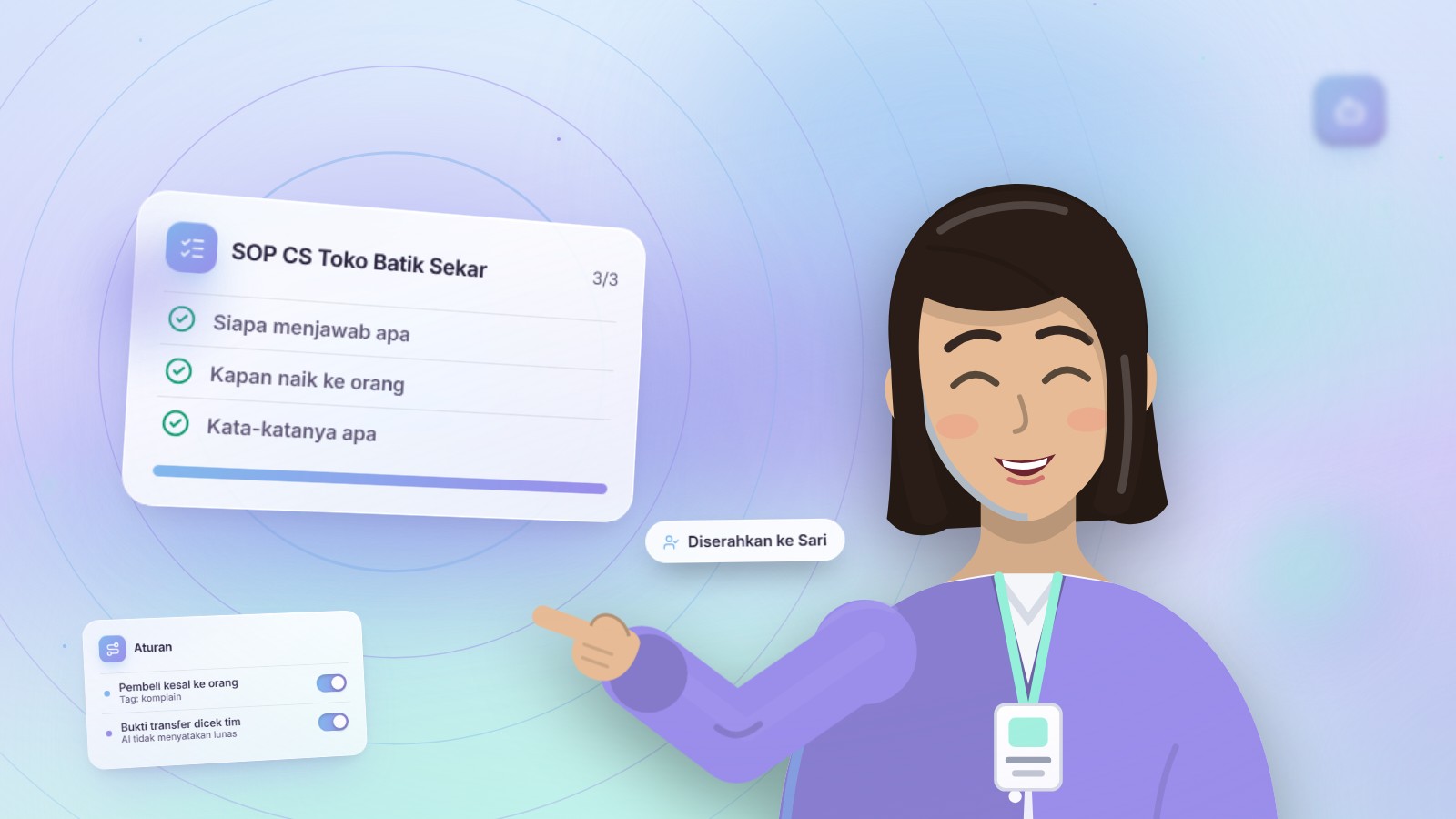
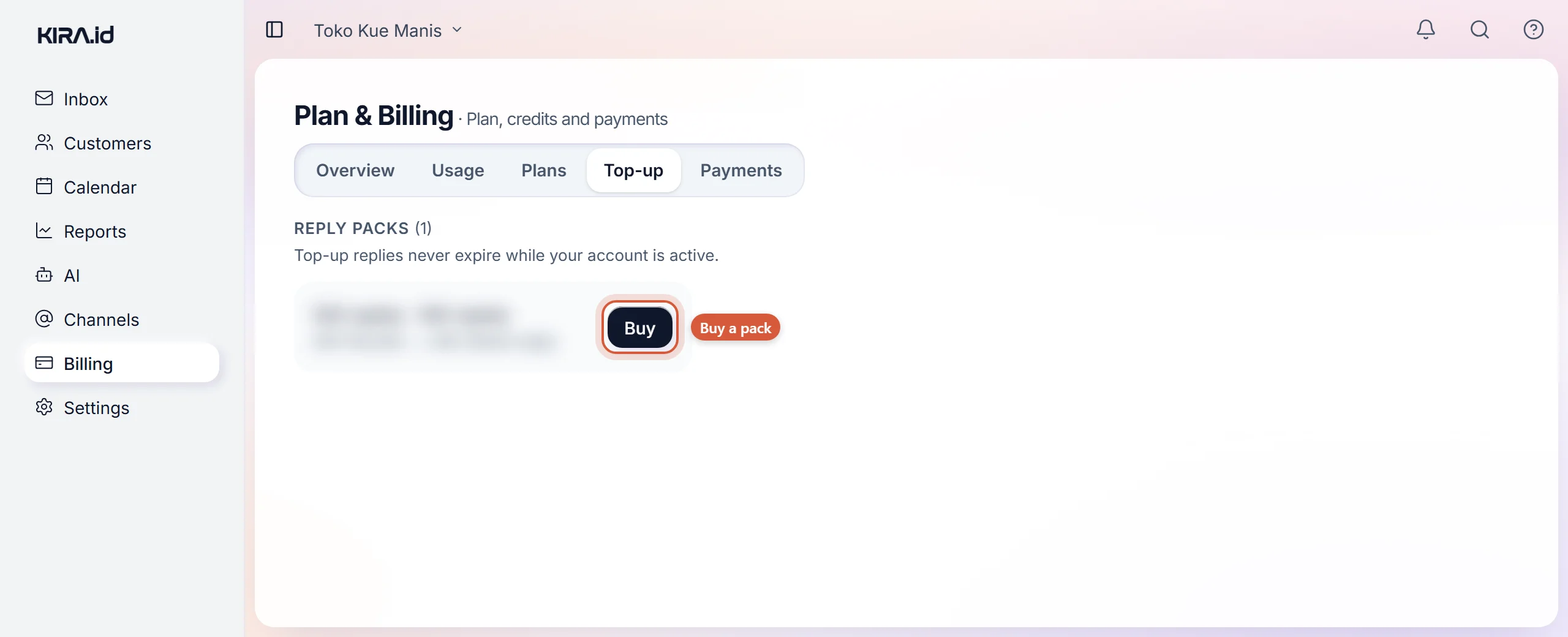
Open Sources, press New source, and on the Facts tab write the questions the way customers ask them: promo terms and dates, how to use the code, the free-shipping limit, the last-order cut-off, the exchange and return policy. Name it "Harbolnas 12.12". Promo prices can go in as a table, and the AI quotes them exactly as written. See Facts: questions and answers and Price lists for the AI.
Why keep it separate: when the sale is over you flip one switch, and the AI stops offering an expired code. The content stays saved for next year.
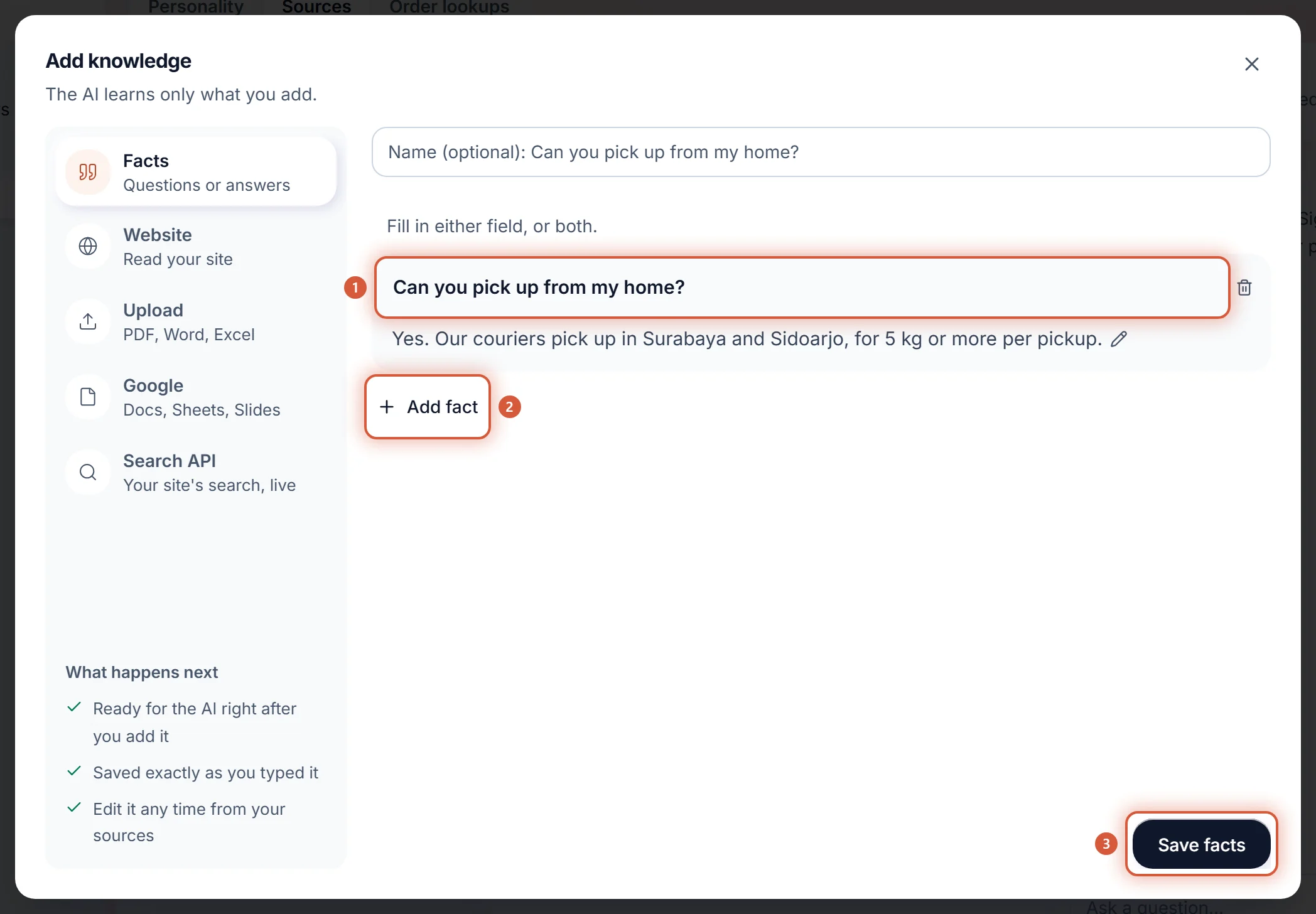
"Where's my order?" will be the biggest question after the day itself. If your order log lives in a Google Sheet, open AI › Order lookups and connect one tab. The AI then answers status, tracking number and last update, only for the buyer themselves, whose WhatsApp number or email has been proven. An order number alone is never enough, and KIRA.id only reads your sheet, it never changes it. See Order lookups from a Google Sheet.
If you don't keep a log like that, that's fine: order questions are still answered as far as the AI's knowledge goes, and then your team checks.
A chat surge means a surge in AI replies. KIRA.id never bills overage and has no automatic top-ups. When allowance and balance run out, the AI stops and new messages go to your team, at the exact hour you're busiest. Owners and Admins are told by bell and email when credits run low, but you don't want to learn that in the middle of a sale. Top-up balance never expires while your account is active, so buying before the season is the cheapest and calmest move. To estimate what you'll need, see estimating monthly AI replies, and to buy, see Top-ups.
/. See Saved answers.Keep the Inbox open and let the AI answer the routine. You only hold what truly needs a person: an upset customer, a request to change or cancel an order, and transfer proofs.
One thing we won't compromise on: the AI never says a payment has been received. KIRA.id doesn't verify transfer proofs. Questions about orders, payments and order changes get an answer from what the AI knows first, then your team checks.
Open Reports › Overview and open the Questions the AI could not answer card. Each line is one FAQ to write before the next Harbolnas. Then look at the Busiest hours map under Reports › Speed › Go deeper to see where the peak really landed. Reading a campaign's pattern afterwards is covered in the chat peak after a promo. Finally, switch off the "Harbolnas 12.12" source.
| No prep | With this list | |
|---|---|---|
| "Why won't the code work?" | The admin retypes it, three versions | The AI answers from one promo source |
| "Where's my order?" | The admin opens the log row by row | The AI answers from the sheet, for the buyer only |
| Who holds the chat | Whoever happens to see it | One name per ticket, automatically |
| Reply allowance | Runs out mid-sale | Checked and topped up beforehand |
| After the sale | The old code is still offered | One switch turned off |
A skincare shop with two admins. The "Harbolnas 12.12" source holds the code, terms and cut-off. One admin covers past midnight, the other starts in the morning.
A fashion shop with a Google Sheet log. Order-status questions are answered by the AI from the sheet. The team only handles size exchanges.
A phone-accessory shop, one owner. The owner installs the app on their phone, switches push on, and only sees the tickets that truly need a person.
Harbolnas follows the double dates: 11 November and 12 December 2026. Organisers and marketplaces announce their own promo schedules, so follow the official announcements.
Write the promo terms as a separate knowledge source, check the reply allowance, set up assignment and team availability, and put push on for whoever's on duty. The order is above.
Yes, as long as the promo terms are in your knowledge and there's allowance or balance left.
The AI stops and new messages go to your team. No extra charge, and the chat stays open.
Rina will still be busy at 00:00. The difference is that she can finish her noodles while they're warm, because the ten answers were written a week ago. Start with Facts: questions and answers, then check Top-ups. If your shop has never been through a surge like this, read AI customer service for e-commerce too. Want company while you prepare? Get in touch.